Common Roof Repairs in Marietta and What Often Causes Them
If you spend enough time around homes and small commercial buildings in Marietta, you start to notice a pattern with roofs. Most problems do not begin as dramatic failures. They start quietly. A bit of loosened flashing near a chimney. A valley that takes on more water than it should after a storm. A leak stain that appears on a ceiling days after the weather clears. By the time a property owner calls for roof repair, the visible issue is often just the last link in a chain that began earlier.
That is why roof problems can feel confusing. The repair you see on an invoice may be small, but the cause may go back to installation details, storm exposure, or deferred maintenance after a weather event. In Marietta, where permit compliance and Georgia contractor rules matter, it also helps to know when a repair is straightforward and when it needs a qualified roofing contractor who understands code requirements, storm damage assessment, and proper leak tracing.
The most common repairs tend to cluster around a few recurring trouble spots. Water follows gravity, but it also follows gaps, seams, bends, and any place roofing materials stop shedding water the way they were meant to. Once you understand where those weak points are, roof leak repair becomes less mysterious.
Why so many roof problems look the same from inside
A homeowner usually discovers a roof issue from below, not above. It might be a damp patch on drywall, peeling paint near a corner, or a musty smell after a storm. That inside symptom can suggest a leak, but it rarely tells you the exact entry point. Water moves. It can travel along decking, framing, or underlayment before it finally shows itself indoors.
That is one reason experienced roofers take leak tracing seriously. A stain on one side of a room does not always mean the opening is directly above it. Valleys, flashing transitions, and roof penetrations can all redirect water. In practical terms, the repair itself may be less about the stain the owner sees and more about restoring the roof’s water-shedding path.
I have seen people focus on the ceiling and miss the real story on the roof. A ceiling bubble can tempt someone to patch interior drywall first, but if the flashing or roof covering above remains compromised, the damage simply returns. Good roof repair starts with the outside details, not the cosmetic aftermath inside.
Flashing repairs are near the top of the list
If I had to name one category that repeatedly causes trouble, it would be flashing. Flashing exists at transitions and interruptions, places where a simple field of roofing stops being simple. Around chimneys, walls, valleys, and penetrations, water needs to be directed away from seams and openings. When flashing is loose, poorly installed, or not integrated properly with shingles and underlayment, water can get in.
That matters because roofs are not just layers of materials stacked on top of each other. They are systems. FEMA guidance stresses that flashing needs to be integrated with shingles and underlayment to prevent water entry. When that integration breaks down, even a roof that looks mostly intact from the ground can leak.
In Marietta, a common repair call might not be “replace the whole roof.” It may be a targeted flashing repair after a storm or after a leak develops around a vulnerable area. The challenge is that flashing failures can masquerade as larger roof failures. A homeowner may think the whole roof is worn out when the real issue is concentrated at one transition.
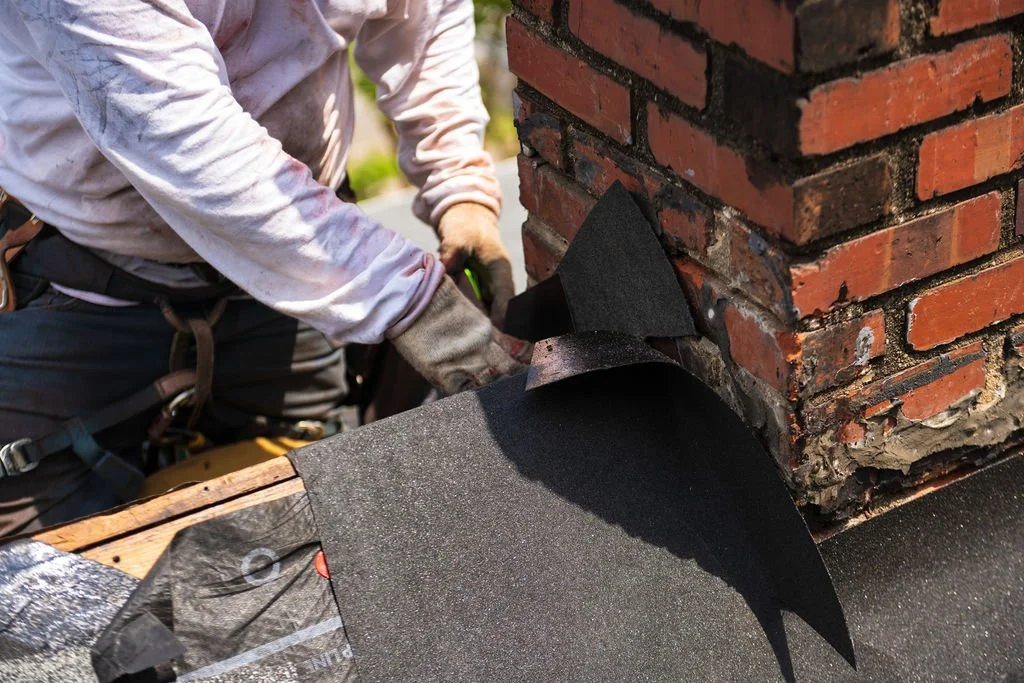
Valleys deserve special mention here. Industry guidance points to valleys as common leak points because they collect and concentrate runoff. That matches what many roofers see in the field. A roof valley handles a lot of water during rain, so small installation flaws become big problems faster there than on an open slope. If valley flashing loosens or was not executed well to begin with, roof leak repair often centers on that exact detail.
Storm damage repairs are common, and sometimes obvious only after inspection
Severe weather changes the conversation quickly. Georgia’s insurance regulator specifically advises property owners after severe weather to photograph damage, notify the insurer promptly, and tarp a damaged roof if it is safe to do so. That advice exists for a reason. Storm damage can be visible, but it can also be subtle.
Hail is one of the most discussed causes because it can damage roof coverings and shorten roof life. The effect is not always a dramatic Check over here puncture. Sometimes the issue is cumulative damage that weakens the roof covering and makes it more vulnerable to later leaks. Wind also shows up again and again in roofing problems. Research from IBHS highlights wind, hail, and other hazards as common causes of roof damage and water intrusion.
For a property owner, one of the trickiest parts is timing. You may not notice a storm-related issue while the weather is happening. You may notice it the next time it rains, or even when a contractor gets onto the roof and identifies loosened components that are no longer shedding water correctly. That is why post-storm roof inspections matter. Not every severe weather event leads to immediate, obvious leakage, but damage can still be present.
A practical example is a roof that looks mostly fine from the driveway after a storm. No tree through the decking, no dramatic missing sections. But closer review might reveal damaged roof covering in a high-exposure area, loosened flashing at a wall intersection, or a valley detail that took a hit and is now vulnerable. Those are real repair issues, even if the owner’s first clue is only a faint water spot indoors a week later.
Roof leak repair often comes down to tracing the path, not guessing
Leak repair sounds simple until you try to do it well. Many leaks are not solved by putting sealant on the first suspicious area. They are solved by understanding how water enters, where it travels, and which component failed first.
That is where professional judgment matters. A rushed patch can temporarily slow water down, but if the root cause is a flashing detail or damaged roof covering upslope, the leak comes back. Good leak tracing often means checking transitions, valleys, and any area where runoff is concentrated. It also means connecting indoor evidence to outdoor roof geometry.
You see this especially after storms. Someone notices discoloration on a ceiling and assumes the nearest roof section above it is the issue. In practice, the actual breach may be several feet away, with water traveling before it appears inside. A careful roofing contractor knows not to oversimplify that process.
When people ask what “common roof leak repair” usually involves, the honest answer is that the visible leak is often the result of one of three broad conditions: storm-related damage, failed flashing, or water concentrating at a detail like a valley. The exact repair depends on which condition is present and how long it has been going on.
Repairs around valleys demand extra care
Valleys are worth their own discussion because they do so much work during rain. On a simple roof plane, water sheds in a relatively direct path. In a valley, multiple roof surfaces send water into one channel. That concentrated flow means details matter more, not less.
IBHS guidance specifically notes that valleys are common leak points. In field terms, that usually means the valley detail is under more stress than surrounding areas. If flashing there loosens, corrodes, or was installed poorly, the chance of water infiltration rises. Even small defects can become larger leaks because the volume of runoff is greater.
This is one of those situations where homeowners can underestimate what they are seeing. A stain near a roof intersection may not look urgent at first. But if the leak source is a valley, waiting can let repeated runoff exploit the same weakness over and over. The eventual repair may then involve more than one component because water rarely damages only a single surface once it gets moving.
I have also noticed that valley issues are often misdiagnosed by people looking for the easiest explanation. They may blame the nearest shingle field or the last area that was repaired, when the true issue is that the valley was not shedding water correctly. That is why a proper inspection matters more than guesswork.
Sometimes the repair itself is not the whole story
A lot of roofing discussions focus on the physical fix, but in Marietta there is also a process side that matters. Building permits are required for new construction, temporary buildings, and certain alterations to existing construction. Marietta and Cobb County enforce current Georgia building codes. For owners, that means some roof-related work is not just a matter of hiring whoever can show up first with a ladder.
It also means the right roofing contractor should understand more than materials. They should be able to navigate permit compliance when applicable, assess storm damage, and carry out leak tracing in a way that aligns with Georgia rules. That is especially important when work goes beyond a tiny patch and moves into more substantial repair territory.
Licensing matters here too. In Georgia, residential and commercial general contractor services performed for compensation require state licensure, with license categories for residential-basic, residential-light commercial, and general contracting work. The state’s rules include experience, age, competency, and examination requirements, and insurance is part of applying for and maintaining licensure. That may sound administrative, but it directly affects roof work because roofing is often tied to larger questions of code, scope, liability, and proper execution.
A homeowner dealing with active leaks may not want to think about paperwork. That is understandable. But the contractor side of the job still matters. A roof is too important to hand over to someone who cannot explain the scope, the compliance side, or the reasoning behind the repair.
The repairs owners call about most often
The jobs themselves vary, but they usually fall into a handful of categories that repeat from property to property:
- flashing repair or replacement where water is entering at a transition
- valley repair where concentrated runoff has exposed a weak point
- roof covering repair after wind or hail damage
- roof leak repair tied to storm-related water intrusion
- temporary emergency protection, such as tarping a damaged area when safe to do so
Even within those categories, the real work is diagnosis. Two houses can both report “a leak after the storm,” yet one needs a focused flashing correction while the other has broader roof covering damage from hail or wind. That is why broad labels are less useful than an inspection by someone who knows where water tends to win.
How weather turns a minor defect into a major headache
One thing owners often underestimate is how little defects behave during bad weather. A roof can tolerate a lot when conditions are mild. Then one hard storm tests every vulnerable detail at once. Wind drives rain where gravity alone would not. Hail stresses the roof covering. Valleys carry more water than usual. A loose piece of flashing that had not caused any visible trouble suddenly becomes the path of least resistance.
This is where timing matters. If damage happens during a severe weather event, it is smart to document it promptly. Georgia’s insurance regulator advises homeowners to photograph damage and notify the insurer immediately after severe weather. That is practical advice, not bureaucracy for its own sake. Conditions change, temporary protection may be needed, and early documentation can help establish what happened.
There is also a safety dimension. If a roof is damaged, tarping may be appropriate, but only if it is safe to do so. That phrase matters. Climbing onto a compromised or wet roof during the aftermath of a storm is one of those decisions that can go badly in a hurry. Emergency protection should reduce risk, not add to it.
In more serious situations, disaster-caused roof and ceiling damage from leaks may be eligible for assistance through FEMA, with verification typically done by on-site inspection. That will not apply to every roof problem, of course, but it is part of the larger picture after significant events.
Choosing the right roofing contractor in Marietta
A roof problem tends to make people move fast, which is understandable. Water inside a building creates pressure. Still, rushed decisions are where owners get into trouble. Georgia’s insurance regulator warns consumers to avoid signing with rushed or unsolicited contractors after severe weather. That guidance is worth taking seriously.
The better approach is to slow down just enough to check whether the contractor fits the work. In Marietta, that means looking for a company or professional who can handle the practical and regulatory sides of the job.
- confirm they can explain the damage and the proposed repair clearly
- ask how they handle leak tracing, not just visible patching
- make sure they understand permit compliance where applicable
- verify they operate within Georgia licensing requirements
- be cautious if the pitch feels pressured, vague, or tied to a storm-chasing sales approach
A good roofing contractor does not need to manufacture urgency. They can tell you what is urgent, what can wait briefly, and what the trade-offs are. That kind of judgment is often the difference between a repair that lasts and a repair that merely buys time.
What homeowners can do before the repair crew arrives
There is a narrow window between discovering a problem and getting professional help, and what happens in that window matters. The most useful thing an owner can do is observe carefully. Photograph interior damage, any visible exterior damage from the ground, and note when the leak appeared and under what weather conditions. If the issue follows a severe weather event, notify your insurer promptly.
Just as important is what not to do. Do not let panic push you into signing with the first unsolicited person who knocks after a storm. Do not assume the visible interior stain marks the exact leak location. And do not try to convert a roofing issue into an interior cosmetic project before the roof itself is addressed.
When safe, temporary protection can help limit additional water entry, but this is where caution is essential. Wet roofs, damaged decking, and steep slopes are not forgiving. If tarping is needed, the safe path is often to have professionals handle it.
The real cause is often cumulative, not sudden
It is easy to frame every roof failure as one storm, one leak, one event. In reality, many common repairs in Marietta come from cumulative stress. A vulnerable flashing detail may survive several storms before finally letting in water. A valley may handle runoff for years, then begin leaking once a small defect expands. Hail damage may not create an immediate interior emergency, but it can shorten the roof’s life and leave it more exposed later.
That is why the most valuable part of a repair visit is often the explanation. Owners need to know not just what broke, but why it broke there. Was the problem concentrated at a transition? Did severe weather damage the roof covering? Did water exploit a valley because the flashing was compromised? Those answers help people make better decisions about repair scope, timing, and whether the issue is isolated or part of a larger pattern.
For Marietta property owners, the headline is fairly simple. The most common roof repairs usually involve the places where water is hardest to control and where weather hits hardest: flashing, valleys, storm-damaged roof coverings, and the leaks that follow. The causes are often just as consistent: wind, hail, loosened or poorly installed flashing, and concentrated runoff at roof details.
Once you see roofs through that lens, the repair process becomes clearer. You stop thinking only in terms of stains and symptoms, and start thinking in terms of pathways, transitions, and water management. That is the mindset that leads to better roof repair, better roof leak repair, and better choices when it is time to call a roofing contractor.